30th International ALTA Conference
Rare Earths and Uranium
The Latest Innovations, Technologies, and Strategies in the Extraction and Processing of Rare-Earth Elements and Uranium
6 May 2026 ALL TIMES AWST
Wednesday, 6 May
GLOBAL DEMAND
STUDENT VOLUNTEER PRESENTATION: Recovery of Rare Earth Elements from Western Australian Refractory Clay-Hosted Deposits.
 Quang Thinh Tran, BEng, PhD candidate, Curtin University
Unlike ionic adsorption clays, where rare earth elements (REEs) are recovered through salt leaching (i.e., sulphate salts). Most clay-hosted deposits in Western Australia are refractory. They require pretreatment, similar to monazite and xenotime, or more aggressive leaching conditions. Without this, recoveries are low and uneconomical. This study emphasises thorough characterisation to enable simple, optimised pretreatment, followed by leaching with environmentally benign lixiviants to meet ESG requirements.
IAEA Support to Member States for Sustainable Uranium Production Cycle Activities
 Carmen Good, Uranium Production Specialist, International Atomic Energy Agency
The IAEA assists its Member States in developing sustainable uranium production cycle activities to ensure a reliable nuclear fuel supply. Support spans all phases—from exploration and mining to processing, decommissioning, and remediation. The Agency provides technical advice, guidance publications, and integrated review missions, along with up-to-date information on global uranium resources, production trends, and demand projections. These efforts help Member States build robust infrastructure and adopt best practices for safe, responsible uranium production.
14:30Afternoon Tea in the Exhibit Hall with Poster Viewing
PROCESS OPTIMISATION
Impurity Control in Rare Earth Hydrometallurgy: A Combined Experimental and Thermodynamic Study
 Esme Lau, PhD MIEAust CPEng NER, Principal Process Engineer & Team Leader, Critical Minerals & Hydrometallurgy, Lithium, REE, Battery Materials

The selective removal of impurities from rare earth sulfate liquors is critical to achieving high-purity rare earth products. This study investigates the use of controlled phosphate addition to promote precipitation of iron, thorium, and refractory metals while minimizing rare earth losses. Experimental work was complemented by thermodynamic modeling to evaluate precipitation behavior under varying pH conditions. Results demonstrate strong agreement between modeled and measured solubility trends, providing a predictive basis for optimizing impurity control. The combined experimental–modeling approach advances understanding of impurity phase stability and supports the design of more selective, efficient rare earth purification processes.
Lessons Learned from Rare Earth Projects with Beneficiation and Purification
 Don Ibana, Consulting Metallurgist, METS Engineering
Rare earth elements (REE) are a key to modern society and they are typically difficult metallurgical development projects. The typical unit operations are mining, beneficiation, hydrometallurgical treatment, separation, and refining to produce magnets with the last two steps being dominated by Chinese knowhow. This paper discusses how each REE deposit is unique, the beneficiation testwork and hydrometallurgical processing to producer mixed rare earth carbonates (MREC). It also discusses OPEX and CAPEX and the challenges with developing REE projects. A number of rare earth projects are discussed and differences in mineralogy and difficulties in achieving a product that meets market specifications.
Mines to Medicine—The Potential for Radium Recovery from Rare Earth Refining
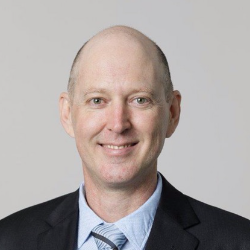 Andrew Napier, General Manager, entX
entX are establishing a vertical supply chain capability to process waste and underutilised materials, rich in radium and thorium isotopes, to produce feed material suitable for radiopharmaceutical applications. This presentation will cover opportunities to recover radium from residue or waste streams generated during the processing or refining of thorium containing rare earth materials and overview the pathway for this to be used in production of radiopharmaceuticals for targeted alpha therapy treatment.
17:30Networking Reception and ALTA 2026 Awards Dinner
*Separate registration required. See registration page for details.

20:30Close of the Rare Earths and Uranium Track


25-26 MAY

26-27 MAY